When I first started keeping fish in the 1990s, freshwater shrimp barely featured in the hobby. Today you can buy Red Cherries, Bloody Marys, Blue Dreams, Yellow Neons and many other Neocaridina colour varieties — and there is an enormous amount of information about them online.
That abundance of information is both a blessing and a curse. Search almost any shrimp question and you'll find forum posts, YouTube videos, social-media comments and care sheets giving different answers. For a beginner, the real value of a good Cherry Shrimp book is having one coherent reference you can return to when you're unsure what to do next. If you already know you want a specialist Neocaridina guide, you may also find my guide to what a good Neocaridina shrimp book should cover useful.
What should a good Cherry Shrimp book cover?
If I were buying my first Neocaridina book today, I would want it to answer the practical questions that appear during the first few months of keeping shrimp — not just give me an introduction to what a shrimp is.
At a minimum, I would look for clear coverage of:
- choosing and setting up the aquarium
- substrate, filtration, heating and lighting
- cycling the tank before shrimp are added
- temperature, pH, ammonia, nitrite, nitrate, GH and KH
- what TDS can — and cannot — tell you
- feeding and avoiding overfeeding
- buying healthy shrimp and introducing them to the aquarium
- telling males from females
- breeding and the Neocaridina life cycle
- molting and the so-called “white ring of death”
- suitable tank mates
- common pests, parasites and health problems
That is a fairly long list, but those are the subjects beginners repeatedly end up searching for once they start keeping shrimp. A specialist book should save you from having to piece all of those answers together from a dozen different sources.
“Shrimp love stability!”— Richard James, The Neocaridina Shrimp Handbook
That short line sums up a surprisingly large amount of successful shrimp keeping. Beginners often assume that the answer to a problem is to change something immediately. In reality, repeatedly adjusting water, moving décor, changing foods, adding chemicals and chasing exact numbers can create more instability than the original issue.
Three shrimp books worth considering
There are not hundreds of dedicated Cherry Shrimp books to choose from, which is one reason search results can feel surprisingly thin. These are three of the more relevant beginner-oriented books you are likely to encounter.
| Book | Best for | Focus | My take |
|---|---|---|---|
| The Neocaridina Shrimp Handbook Richard James |
Cherry Shrimp / Neocaridina keepers | Specialist Neocaridina care | Best fit if Neocaridina are your main interest |
| Shrimps for Beginners Alina Daria |
New freshwater-shrimp keepers | Broader beginner overview | Useful if you want an introduction beyond one genus |
| Aquarium Shrimp Aqua Health |
Readers wanting a shorter overview | Aquarium setup and general shrimp care | Another broad entry point into the hobby |
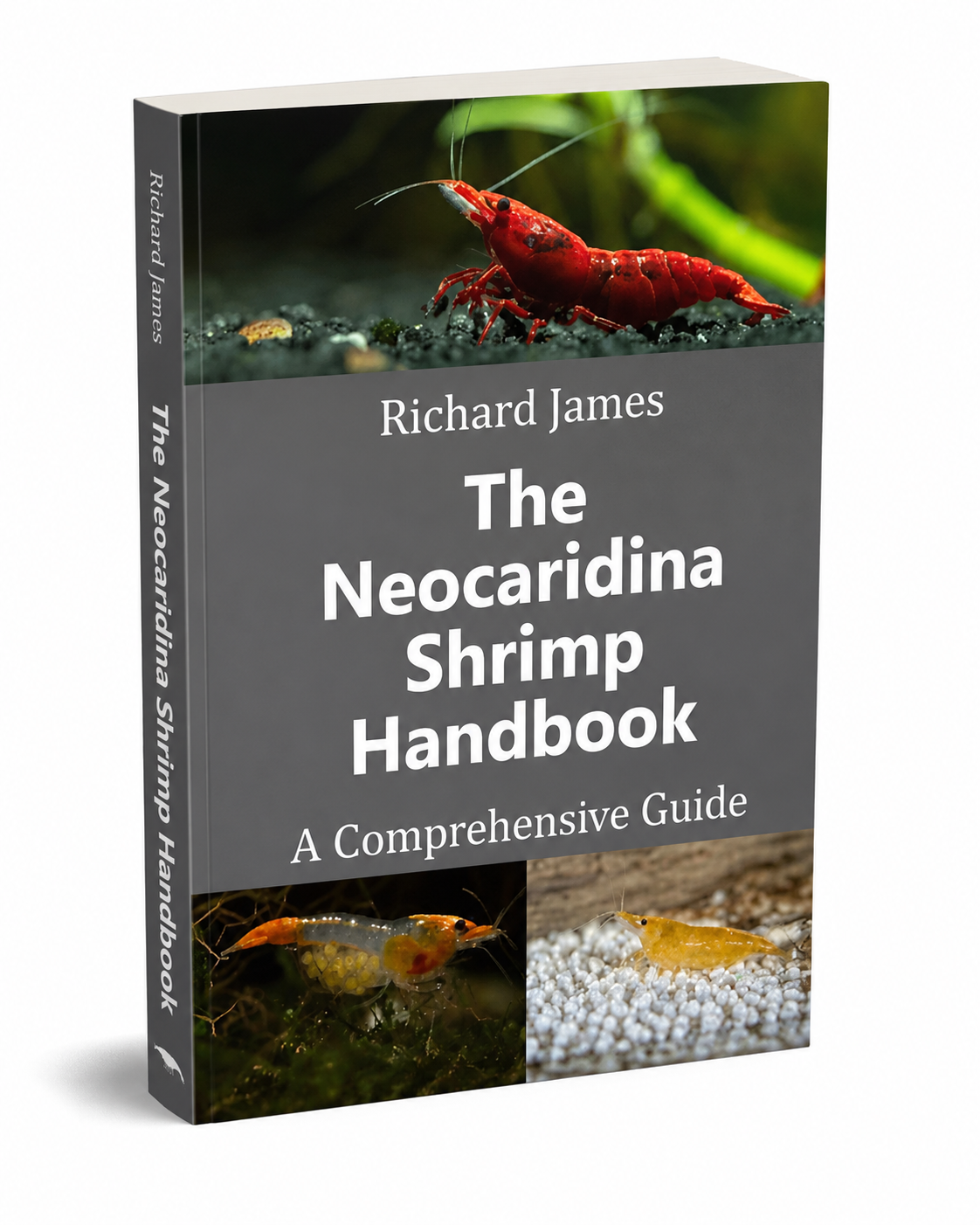
1. The Neocaridina Shrimp Handbook — Richard James
A specialist guide written specifically around Neocaridina davidi, including the Red Cherry Shrimp.
I wrote the handbook because I wanted one practical reference that brought together the subjects I was repeatedly discussing with shrimp keepers. I've been keeping and breeding fish and shrimp since the early 1990s, worked full-time in the aquarium trade, and for a number of years my wife and I bred and sold thousands of Neocaridina shrimp.
The book is 97 pages and includes more than 40 colour photographs and diagrams. It begins with the shrimp themselves — anatomy, colours and grading — before moving through aquarium setup, filtration, cycling, water parameters, plants, feeding, sourcing shrimp, acclimation, sexing, breeding, molting, tank mates, quarantine, pests and disease.
- Best for: beginners whose main focus is Neocaridina / Cherry Shrimp
- Format: digital edition and paperback
- Approach: practical, experience-led and designed to be easy to reference
- Particularly useful for: water parameters, breeding, molting and troubleshooting
My verdict: unsurprisingly, this is the book I would point a new Neocaridina keeper toward first. It doesn't try to cover every freshwater shrimp species. It stays focused on the shrimp most hobbyists mean when they say “Cherry Shrimp”.
2. Shrimps for Beginners: Keeping and Care in a Freshwater Aquarium — Alina Daria
A beginner-focused freshwater shrimp guide rather than a book devoted only to Neocaridina.
This is a useful alternative if you are at the very beginning of the hobby and want a broader overview of freshwater shrimp. Its published contents include general information, popular species, sex and reproduction, buying shrimp, aquarium setup, cycling, diet, behaviour, disease and frequently asked questions.
Because it is broader in scope, that can be an advantage if you are still deciding which shrimp you want to keep. The trade-off is that a general freshwater-shrimp book naturally has less room to concentrate on one genus than a dedicated Neocaridina guide.
Best suited to: someone who wants an introduction to freshwater shrimp as a whole before deciding where to specialise.
3. Aquarium Shrimp — Aqua Health
A shorter general guide covering aquarium setup, Neocaridina and other common freshwater shrimp.
This book is another option you may encounter when searching for aquarium shrimp books. Published descriptions emphasise Neocaridina colour strains, aquarium setup and equipment, acclimation, feeding, maintenance and reproduction, with some coverage of other shrimp species.
For somebody who wants a compact overview, that breadth may be appealing. If your goal is specifically to breed and maintain a long-term Neocaridina colony, however, I would still favour a guide that can spend more time on the species you actually keep.
Best suited to: readers looking for a concise introduction to aquarium shrimp rather than a Neocaridina-only reference.
Why I prefer a specialist Neocaridina book for Cherry Shrimp
Different freshwater shrimp do not all want identical conditions. Caridina, Amano Shrimp, Ghost Shrimp and Neocaridina may share the word “shrimp”, but that doesn't make their care interchangeable.
That matters particularly when you reach subjects such as water hardness, substrate choice, breeding and temperature. A beginner can easily read advice written for a different shrimp and assume it applies to Red Cherries.
If you already know you want to keep Neocaridina davidi, I think there is a real advantage in buying a book that stays focused on them. It reduces the amount of filtering you have to do as a reader: Does this apply to my shrimp, or is this section talking about another species?
Do you even need a Cherry Shrimp book in 2026?
No — in the strictest sense, you don't. There is enough free information online to keep Neocaridina successfully without ever buying a book.
The reason I still think a good book is useful is consistency. Online advice is fragmented. One person tells you never to do a water change; another insists on changing 50% every week. One source tells you TDS is the single most important number in a shrimp tank; another barely mentions it. One person says drip acclimation is mandatory; somebody else has been moving shrimp successfully for years without doing it.
A book gives you one complete approach. You can agree or disagree with parts of it, but at least you know the advice is coming from the same set of experiences and assumptions from beginning to end.
So, which Cherry Shrimp book should you buy?
If your aquarium is going to be centred on Red Cherry Shrimp, Bloody Mary Shrimp, Blue Dreams, Yellow Neons or another Neocaridina davidi colour strain, I would choose the most focused Neocaridina guide you can find.
If you are still exploring freshwater shrimp generally and might end up keeping Caridina, Amanos or several species, a broader beginner book can make more sense.
Whichever book you choose, don't judge it only by page count. Look at whether the author explains the practical decisions you will actually have to make: how to cycle the tank, what your GH and KH mean, what to feed, what to do when a shrimp fails to molt, how to recognise common pests and — perhaps most importantly — when not to start changing things.

About Richard James
Richard has been keeping and breeding aquarium fish and shrimp since the early 1990s. He has worked in the aquarium trade, bred and sold thousands of Neocaridina shrimp, and now creates practical shrimp-keeping content and writes about the hobby.
Frequently asked questions
What is the best book for keeping Cherry Shrimp?
If Cherry Shrimp are your main interest, look for a book specifically focused on Neocaridina davidi. It should cover setup, cycling, water parameters, feeding, breeding, molting, tank mates and troubleshooting rather than treating Neocaridina as a small section inside a much broader aquarium book.
Are Cherry Shrimp and Neocaridina the same thing?
In normal aquarium-hobby use, “Cherry Shrimp” generally means Neocaridina davidi. The classic Red Cherry is the best-known colour form, but the same species is also selectively bred into blue, yellow, orange, green, black and other colour strains.
Is a shrimp book worth buying when so much information is free online?
It depends on how you like to learn. Free information can be excellent, but it is spread across many authors and often conflicts. A good specialist book gives you one organised reference you can keep beside the aquarium and return to when something changes.